Inside the review

See exactly what you get.

A report written for your child’s age and walked through with you in person. Here is what goes into it, and the care that goes into every page.

Cover page of the MyDNA Kids sample review for an 8-year-old
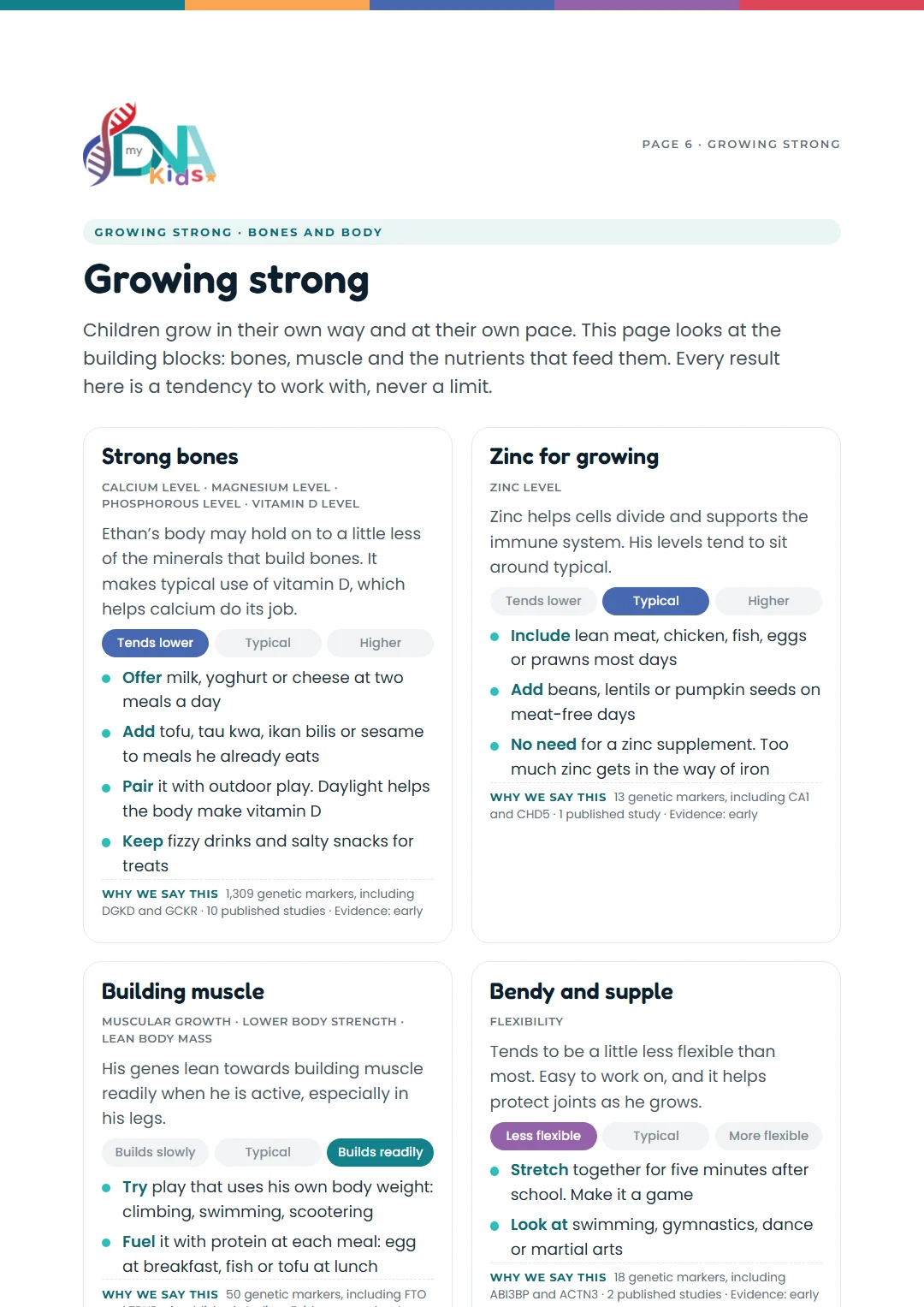
Growing strong page of the MyDNA Kids sample review: bones, zinc, muscle and flexibility
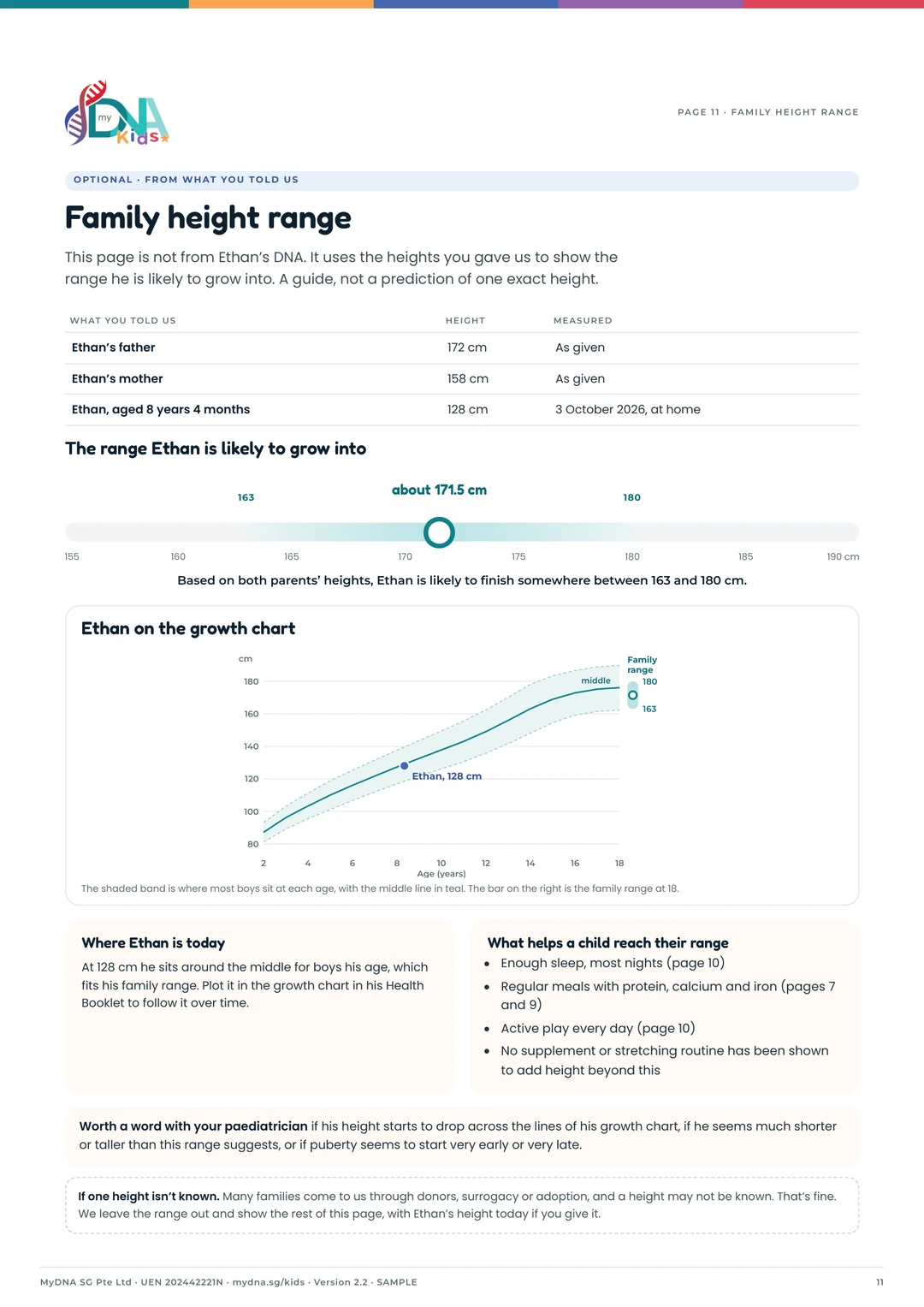
Family height range page of the MyDNA Kids sample review, with a growth chart
What’s inside

Four parts, one conversation

Every review follows the same shape, written for your child’s age and talked through with you in person.

Part 1

What their DNA suggests

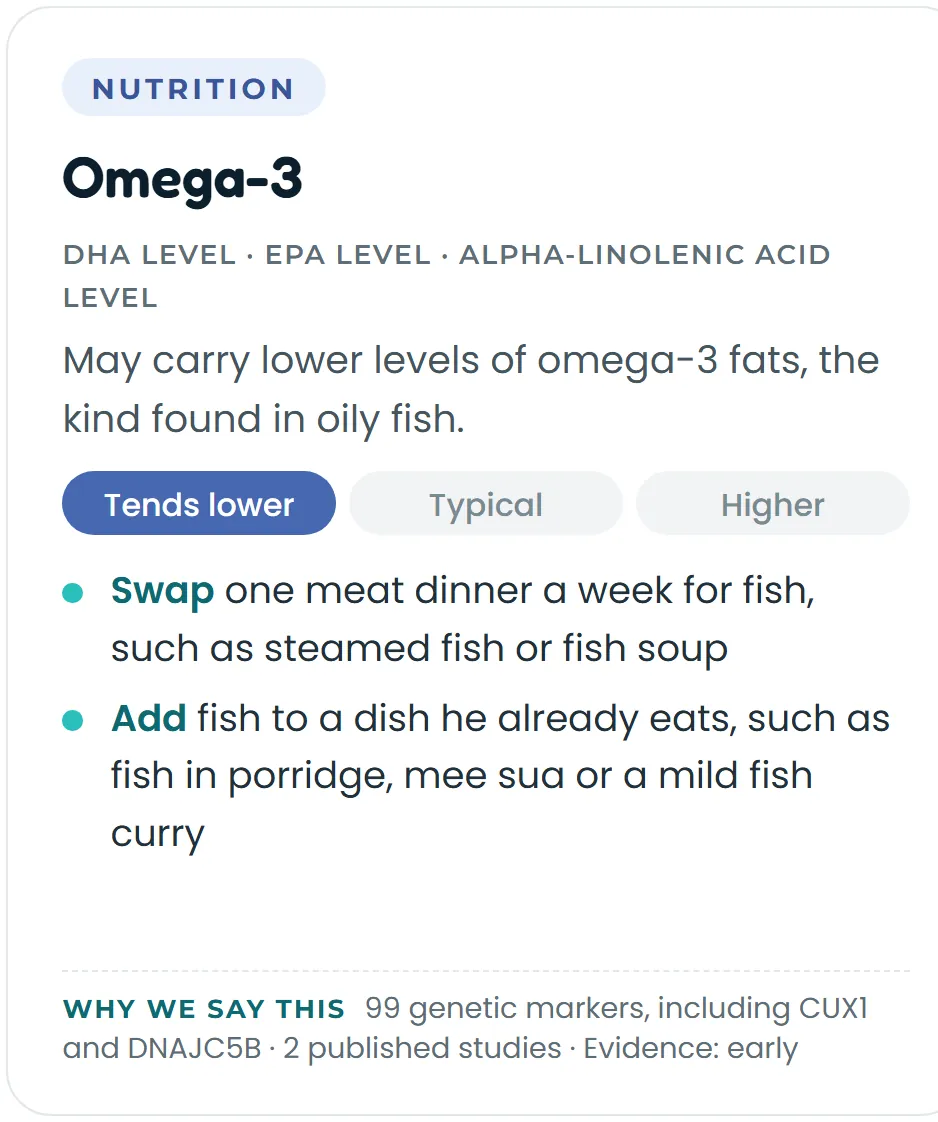
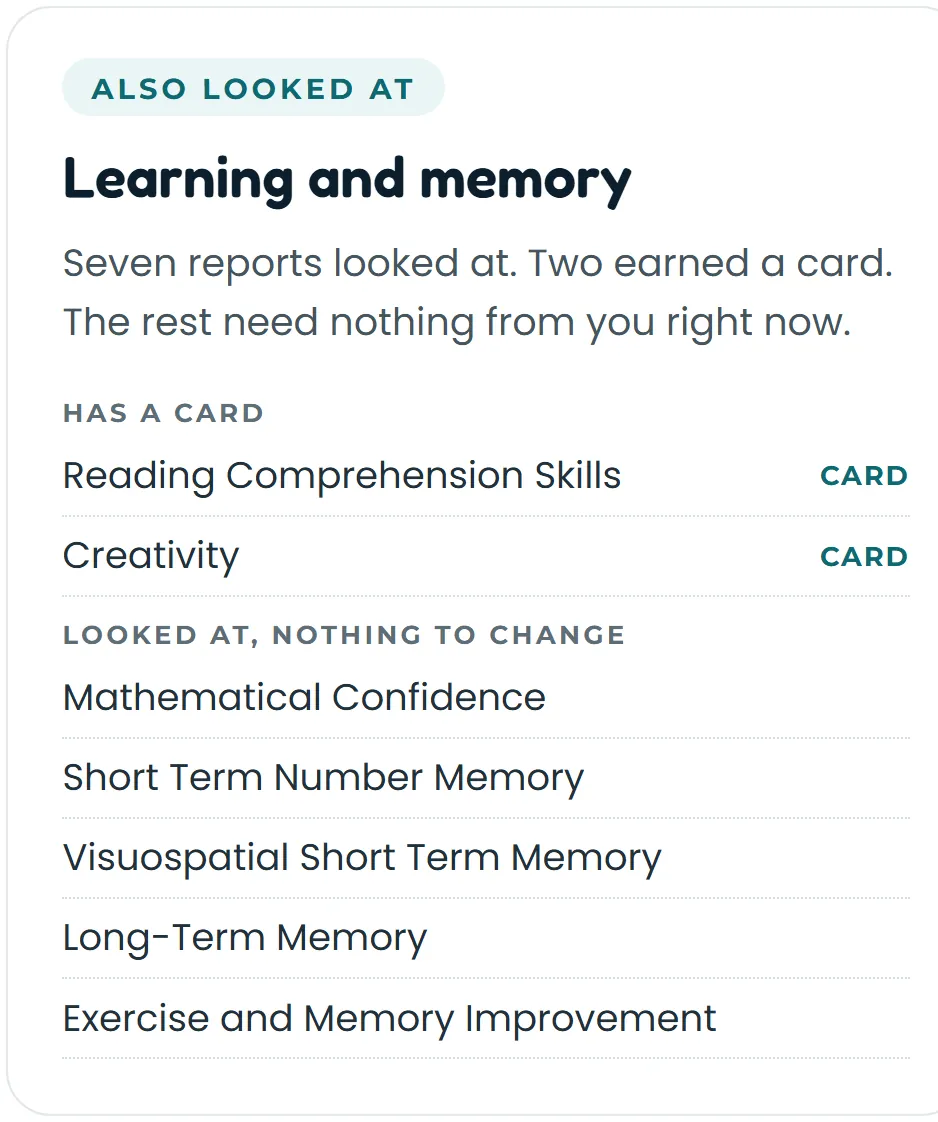
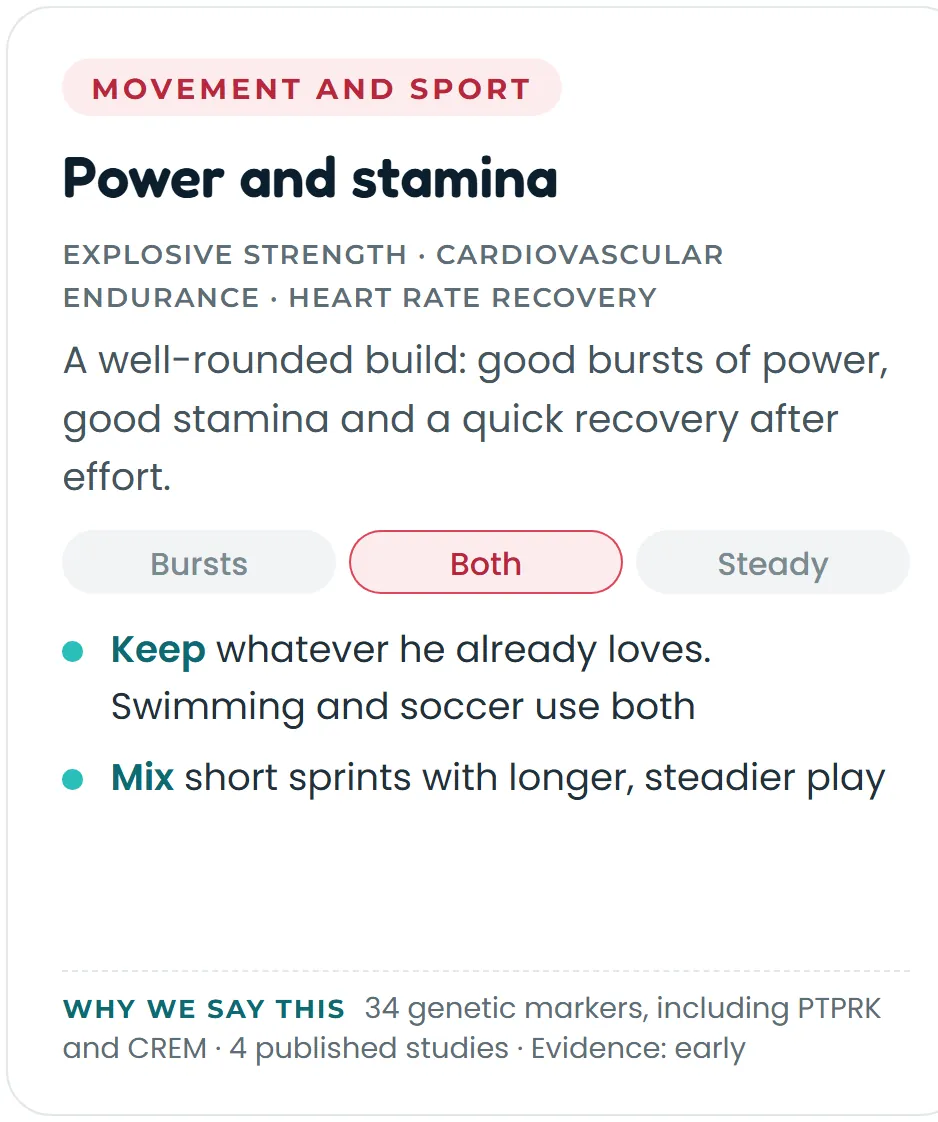
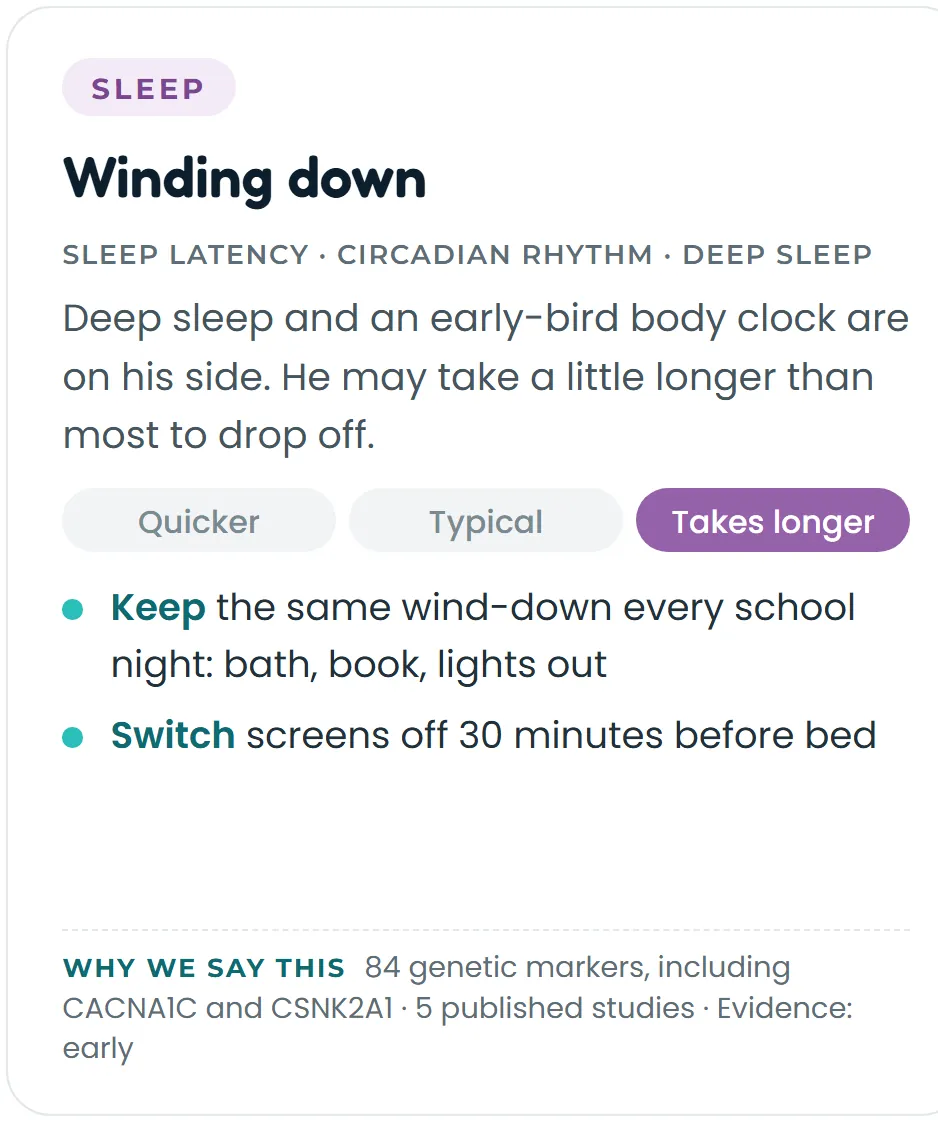
Eight areas, nutrition first, drawn from up to 187 reports. A finding that earns a place gets a card with things to try. Everything else is listed, with a note that nothing needs doing.

Nutrition · Learning and creativity · Movement and sport · Senses and everyday life · Sleep · Health foundations · Temperament · Development
Part 2

What you’ll do next

A “This week” page you keep, agreed with your consultant and dated: two food changes, one routine, one thing to keep an eye on and one thing not to worry about.

This week · Food first · Your path forward
Part 3

Family Rhythm

Test a parent too and your consultant turns both results into one plan for your home: meals, lunchboxes, bedtime and days out, with a shopping list to match.

Meals · Bedtime · Days out · Shopping list
Part 4

The whole picture

Every report looked at in the review, by area, and the science behind each card: the genes, markers and published studies it rests on, so you can see why.

Everything we looked at · The science · Your consultant
Anatomy of a card

Every finding, the same five parts

1

A plain name
What it’s about, in everyday words.

2

The report’s own name
Exactly as it appears in your parent account, so you can find it.

3

A soft band, never a grade
Your consultant marks where your child tends to sit. No numbers or grades on any finding. The only colours in the review are your child’s Nutritional Score band, the same colours you see on the scanner.

4

Things to try
One to three actions that change the kitchen or the calendar, never the child.

5

Why we say this
The genetic markers, genes and studies behind it, and how strong the evidence is.

Reading one card: vitamin D

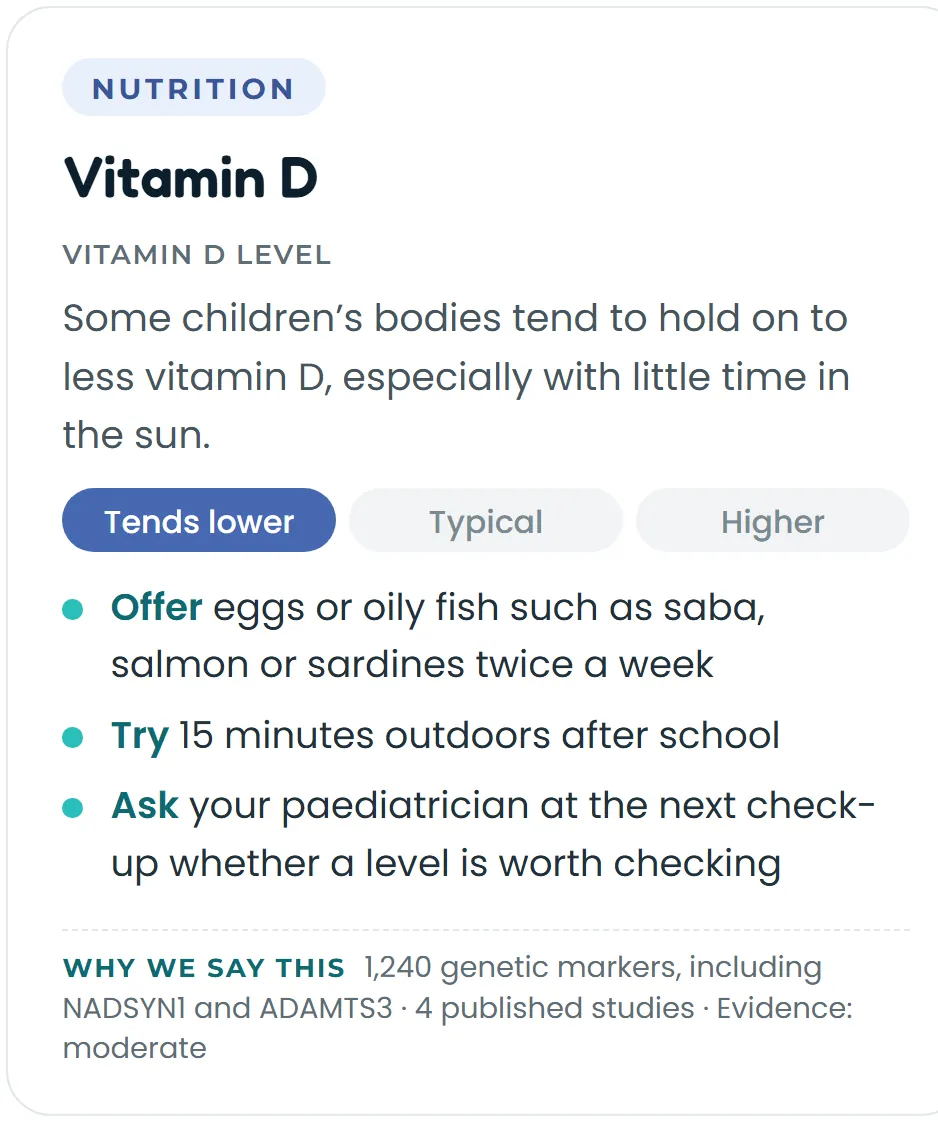
Take the vitamin D card from the sample review, written for an 8-year-old. It sits under Nutrition, because nutrition comes first in every review. The plain name is Vitamin D, and under it is the report’s own name, Vitamin D Level, so you can find it in your parent account.

The band is marked “Tends lower”. In words: some children’s bodies tend to hold on to less vitamin D, especially with little time in the sun. It describes a tendency, not your child’s vitamin D level today.

Then come the things to try: eggs or oily fish such as saba, salmon or sardines twice a week, 15 minutes outdoors after school, and a question for your paediatrician at the next check-up about whether a level is worth checking.

At the foot, “Why we say this” lists 1,240 genetic markers, including NADSYN1 and ADAMTS3, from 4 published studies, with the evidence rated moderate.
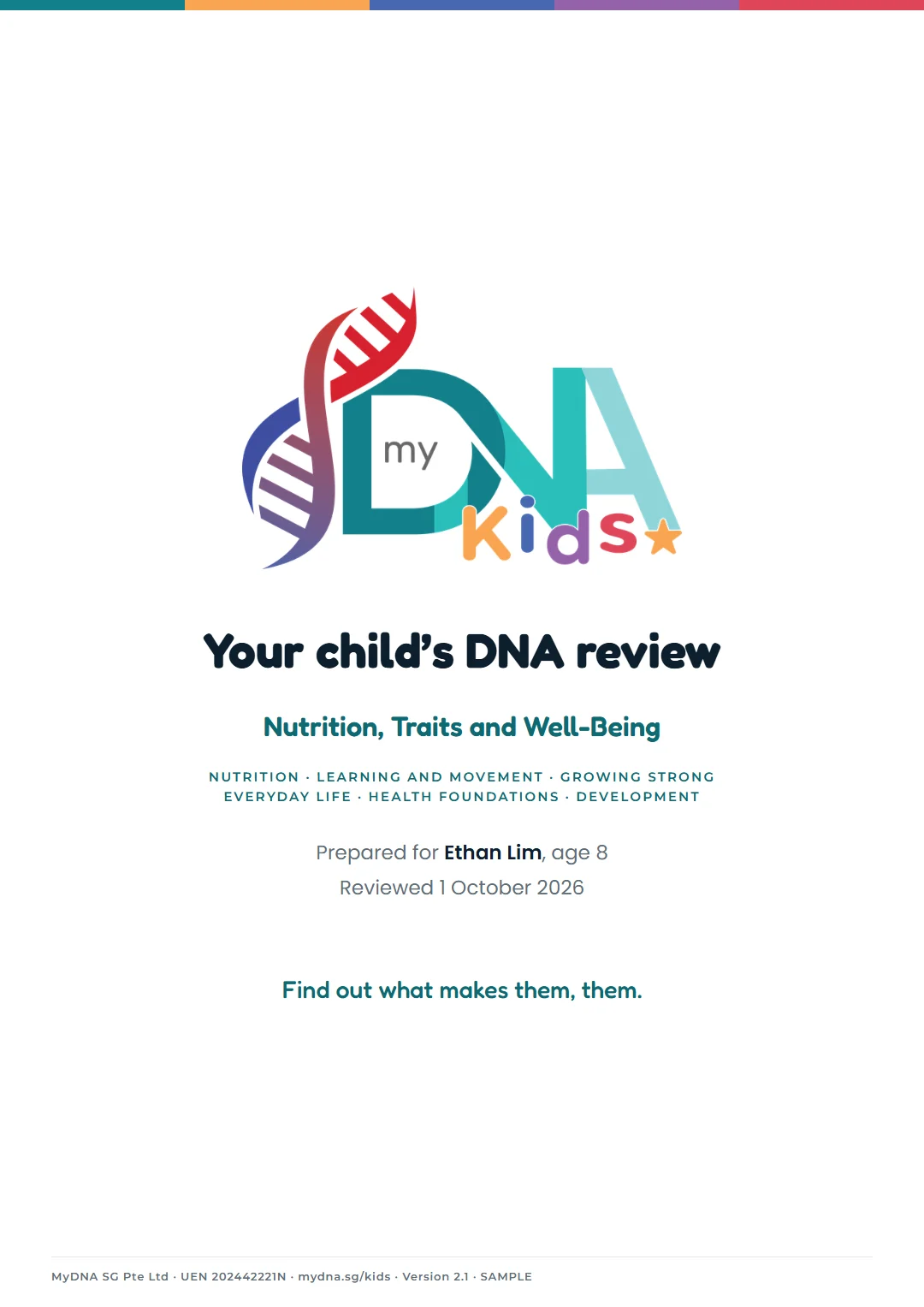
Illustration of children running
Age-appropriate by design

How the review stays gentle

No labels

It never describes your child as anything. Traits are tendencies.

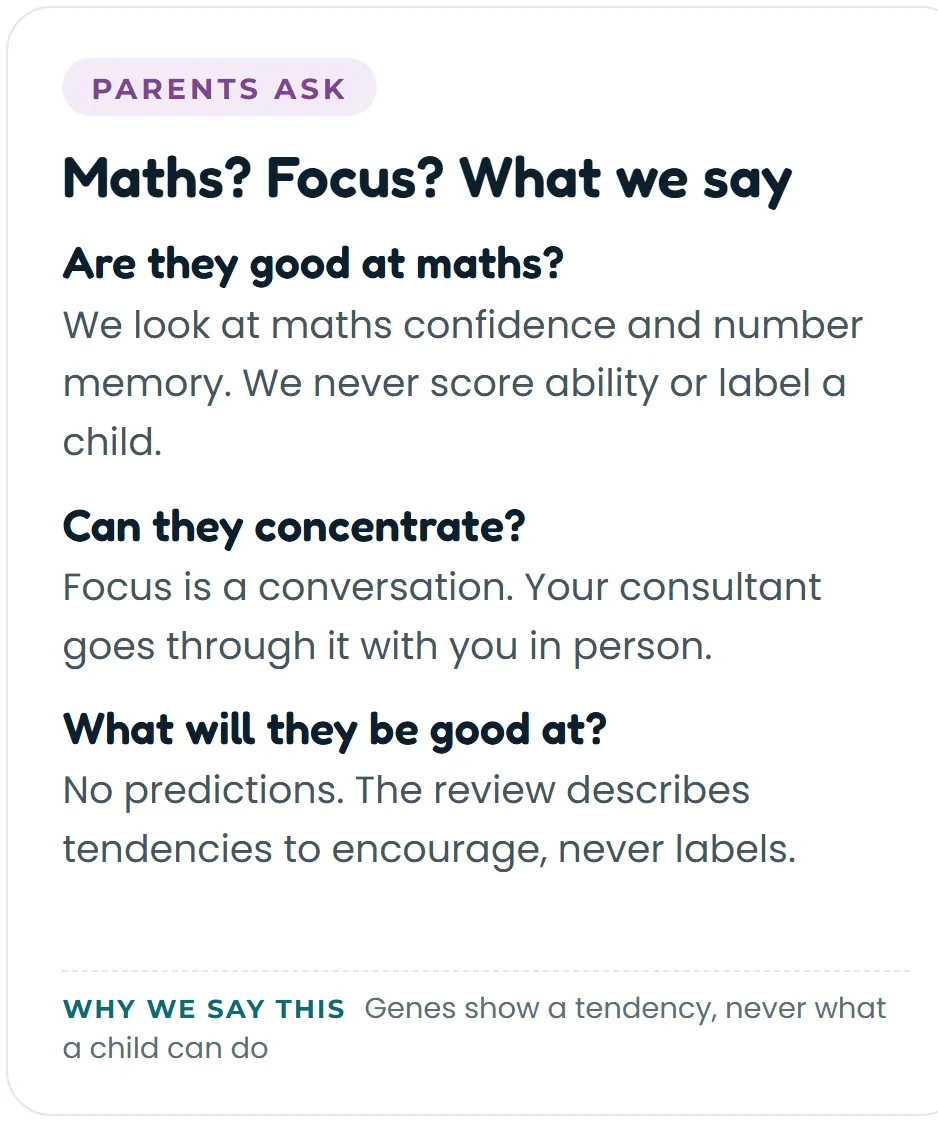
No scores for the mind

No intelligence, talent or personality scores.

No adult risk figures

Adult-onset risks stay out of a child’s review. They remain in your parent account.

Not medical advice

Wellness and nutrition support. Your paediatrician is the first call.

MyDNA provides direct-to-consumer genetic testing for wellness and informational purposes. It is not a medical diagnostic test and does not replace medical advice, diagnosis, health screening or treatment. Genetic predisposition indicates likelihood, not certainty. Always consult your child’s paediatrician about their health, and before starting any supplement.