

Living longer is only half the goal. The other half is staying well while you do it. That is healthspan: the years you live in good health, without serious illness or disability.
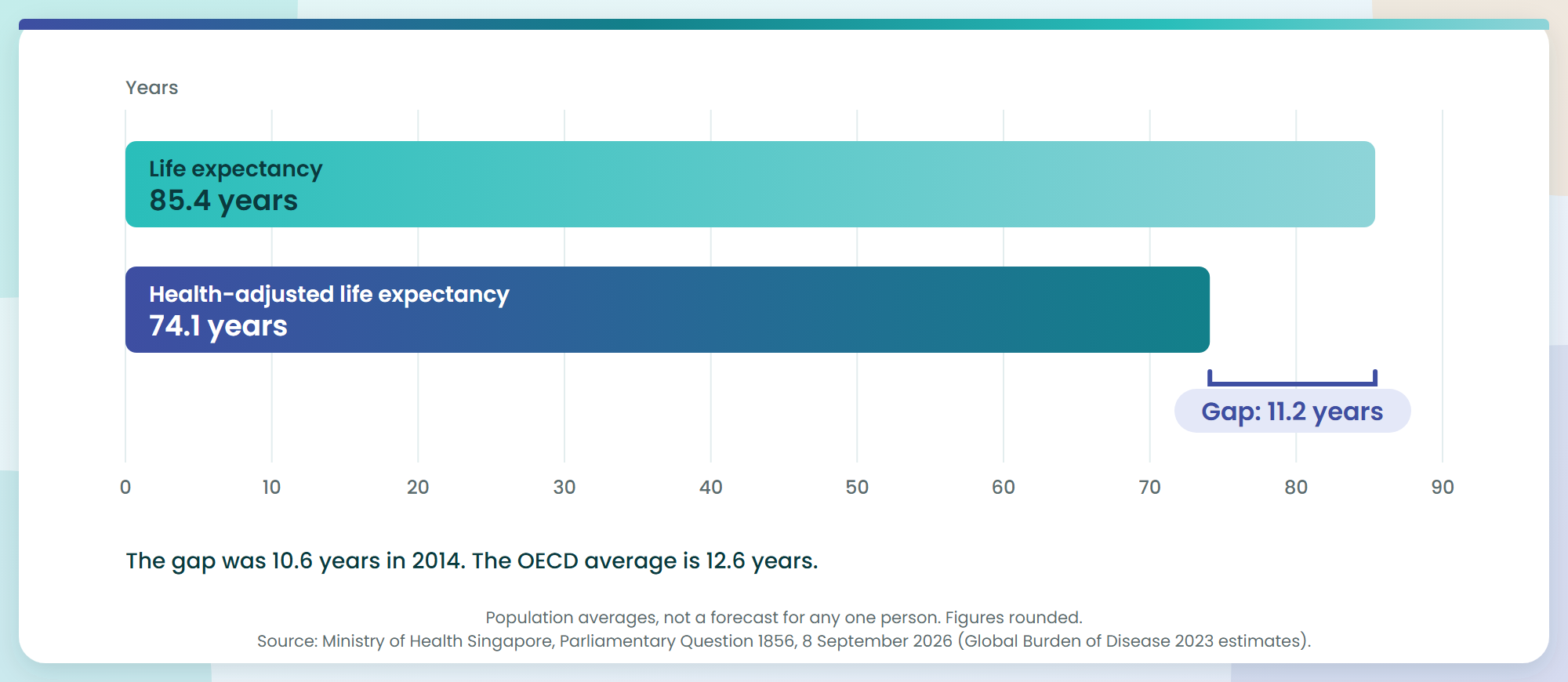
Singapore shows why the distinction matters. The Ministry of Health’s latest figures (2023) put life expectancy at 85.4 years and health-adjusted life expectancy at 74.1 years. The difference, 11.2 years, has crept up from 10.6 years in 2014.
That is a population average, not a forecast for you. It does show that for many people the final stretch of life comes with reduced health, and that is the stretch most of us would like to shorten.
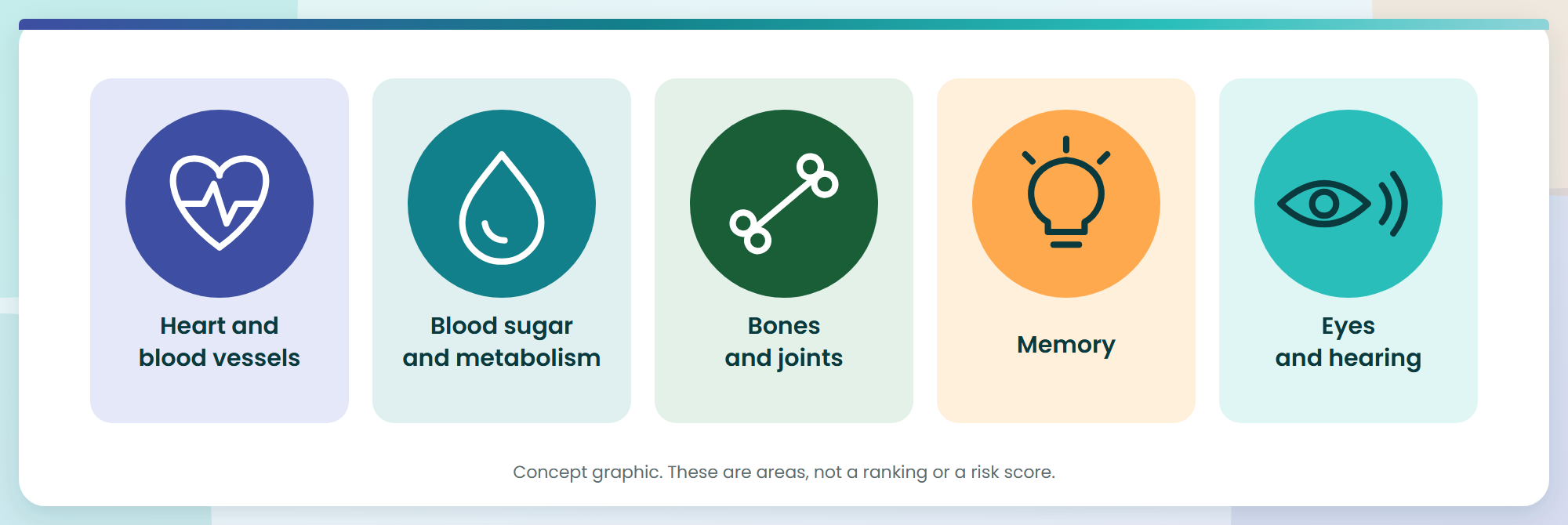
Healthspan is shaped by long-term conditions that tend to build quietly: the heart and blood vessels, blood sugar and metabolism, bones and joints, memory, eyesight and hearing. Many of them give little warning in the early years.
The earlier you know where your body leans, the longer you have to act on it.
Genetics accounts for roughly 30% of health outcomes. The other 70% is what you do with it. A DNA test helps you aim that 70% better.
The reports in the MyDNA DNA Test cover the areas that matter most for healthy ageing.

Heart and blood-vessel conditions often develop without symptoms. Regular blood pressure and cholesterol checks matter whatever your result. Knowing your predisposition can help you and your doctor decide how closely to follow them, and your consultant can help you plan the lifestyle side.

These reports show how your body tends to handle food and energy, so your plan can be built around you instead of around generic diet advice.

Strong bones are built early and protected later. These reports help you prioritise movement and nutrition for your skeleton well before it becomes a concern.

Some of these reports are sensitive. Your consultant goes through them with you in person, and you decide which ones you want to focus on. The habits that support a healthy brain are the same ones that support everything else, so a plan does not depend on any one result.
These are changes people often put off checking. A report can be the prompt to book the eye or hearing check you have been meaning to.
Thirty reports cover predisposition to common cancers. They show likelihood compared with the wider population, never a diagnosis. Their practical use is giving you something to discuss with your GP when you talk about screening. Screening decisions are always between you and your doctor.
As the years go on, more people take regular medicines. The drug-response reports, such as Response to statin (1) and Response to metformin, are worth raising with your doctor or pharmacist. MyDNA never advises starting, stopping or changing a medicine. Always speak to your doctor or pharmacist before changing anything.

A report on its own is a long document. What helps healthspan is a short plan you will actually follow.
The consultation is included with the kit, with no separate fee.
Your DNA does not change, so there is no wrong age to learn it. Earlier knowledge simply gives you longer to act on it. If you are already in your 50s or 60s, the same information tells you where to put your effort from here.
Explore the MyDNA DNA Test, or talk to a consultant. Helix, our assistant, takes a few details first and then connects you with the team.