


Three words keep turning up in conversations about ageing well. They sound alike, and they measure different things.
This guide explains each one and shows where Singapore sits on the first two. It also covers where a DNA test helps and where it does not.
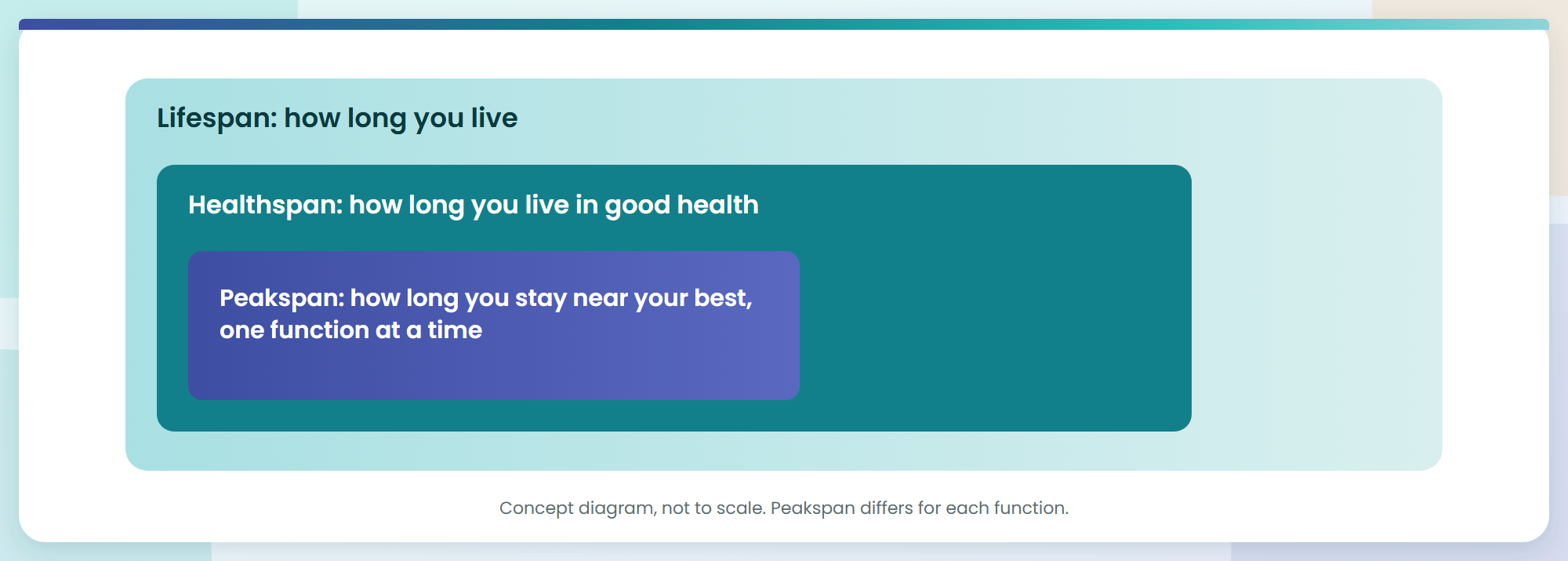
| Lifespan | Healthspan | Peakspan | |
|---|---|---|---|
| The question | How long do you live? | How long do you live in good health? | How long do you stay near your best? |
| How it is measured | Life expectancy | Health-adjusted life expectancy, often shortened to HALE | Proposed: years above 90% of your own peak, one function at a time |
| Status | Long established | Widely used, with no single agreed definition | New, proposed in 2026, not yet a clinical measure |
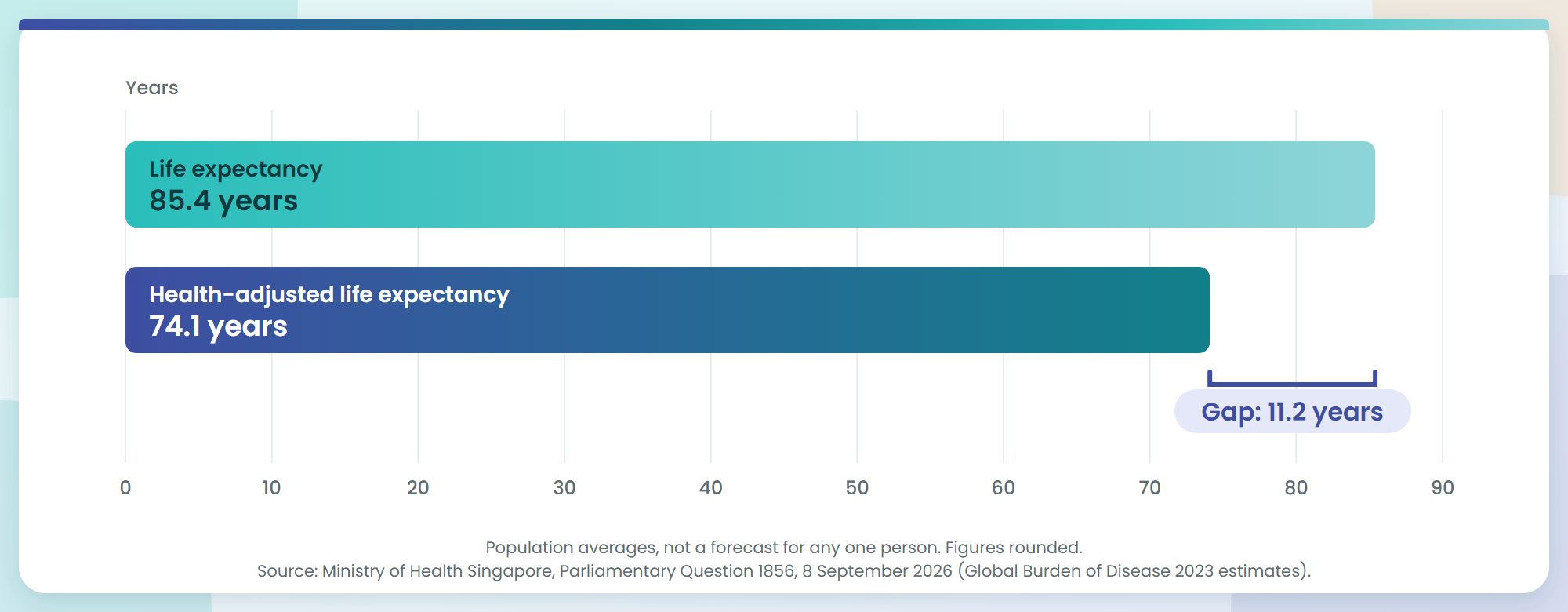
Lifespan is the simplest of the three. Life expectancy is an average for a whole population, not a forecast for any one person. The Ministry of Health cites Global Burden of Disease estimates that put Singapore’s life expectancy at 85.4 years in 2023.
Living longer is welcome. On its own, though, it says nothing about how those years feel.
Healthspan counts the years lived in good health, without serious illness or disability. The usual yardstick is health-adjusted life expectancy, which weights each year by how healthy it was.
For Singapore, the same Ministry of Health source gives 74.1 years for 2023. The difference between the two numbers is 11.2 years, up from 10.6 years in 2014. The OECD average for 2023 is 12.6 years.
The same pattern shows up worldwide. A 2024 study in JAMA Network Open, covering 183 countries, found a global gap of 9.6 years in 2019, up from 8.5 years in 2000. The studies use different data, so compare the trend rather than the individual numbers.
These are population averages. They do not say you will lose 11 years. They do say that for many people the last stretch of life comes with reduced health, and that is the stretch most of us would like to shorten.
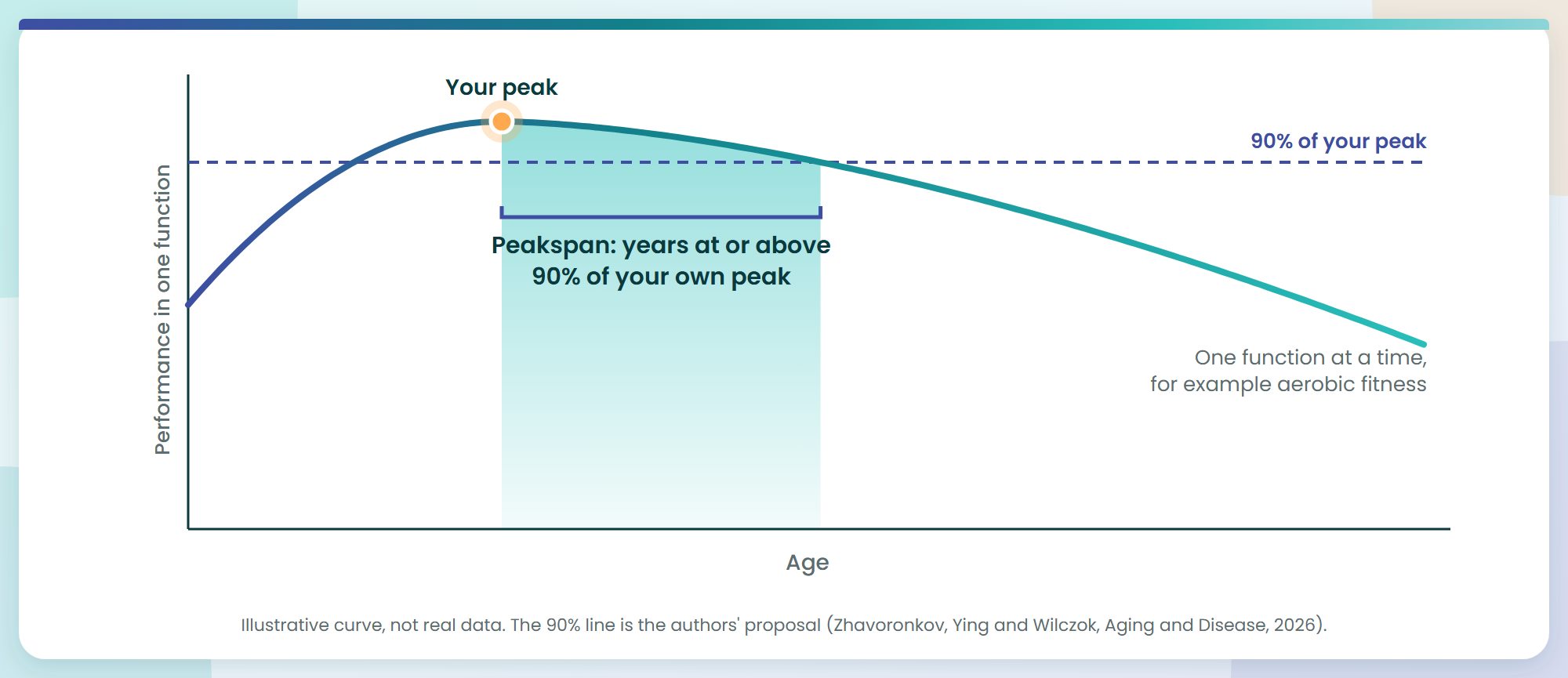
Peakspan is the newest. It was proposed in a 2026 paper in Aging and Disease as the stretch of life in which you keep at least 90% of your peak performance in a particular function, such as aerobic fitness or fast thinking.
It is measured one function at a time, and the authors expect most functions to peak earlier than most people assume. It is a proposed framework, and the 90% line is the authors’ own choice. Our full guide is here: peakspan and DNA.
Take someone who lives to 85, stays in good health into their mid-70s, and finds that their sprint speed and quick thinking peaked in their 20s. All three can be true at once. That is why no single measure tells the whole story.

You do not have to choose. The everyday levers are the same for all three: movement, sleep, food and regular check-ups.
Be realistic about what is in your hands. Healthy habits are where most of your influence sits, and nobody can promise extra years or restored function. Anyone who does is overselling.

Here is how the MyDNA DNA Test relates to each.
Genetics accounts for roughly 30% of health outcomes. The other 70% is what you do with it. A DNA test is a tool for aiming that 70% better.
Explore the MyDNA DNA Test, or talk to a consultant. Helix, our assistant, takes a few details first and then connects you with the team.