
You have probably felt it. Nerves before a big meeting turn into a churning stomach. A bad night’s sleep leaves your appetite off. A heavy meal leaves you flat and foggy.
That is the gut-brain axis at work: a two-way line of communication between your digestive system and your brain. It is one of the most active areas of health research, and also one of the most overhyped. This guide gives you the full picture, including what is well supported, what is still uncertain, and where your DNA fits in.
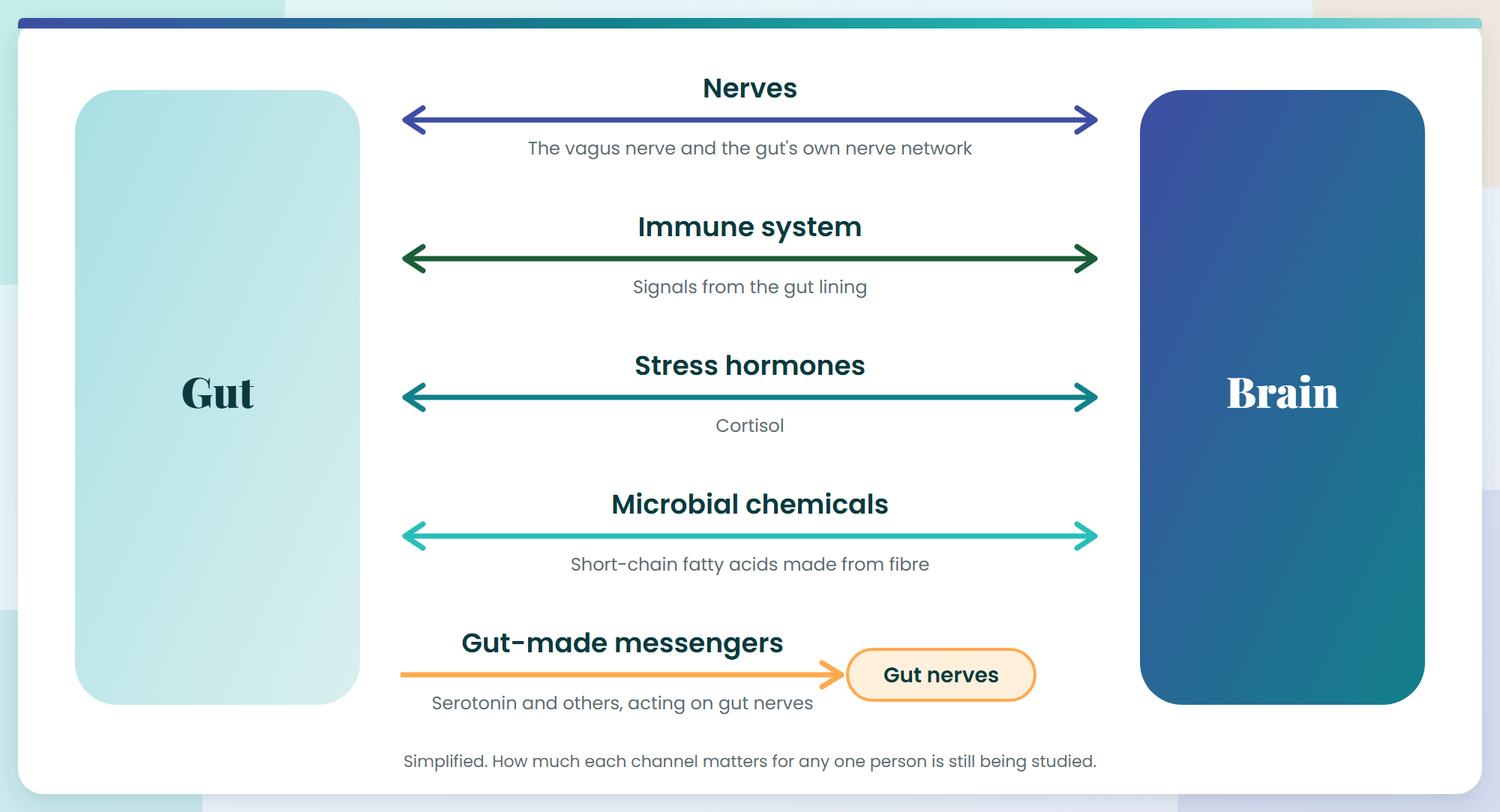
The gut and the brain are in constant conversation. The brain influences how your gut moves, secretes and feels. The gut sends signals back that can reach the brain. Researchers describe five main channels.
| Channel | What it does |
|---|---|
| Nerves | The vagus nerve links the gut and brain directly. The gut also has its own network of nerves, the enteric nervous system, which runs much of digestion locally. |
| Immune system | Most of the body’s immune activity is concentrated around the gut lining, and immune signals travel to the brain. |
| Stress hormones | Stress switches on the body’s stress system, which releases cortisol. That can change gut movement and sensitivity, and gut signals can feed back into the stress response. |
| Microbial chemicals | Trillions of gut bacteria ferment dietary fibre into short-chain fatty acids and other compounds that influence the gut lining, the immune system and nerve signalling. |
| Gut-made messengers | Cells in the gut lining make serotonin and other signalling chemicals that act on gut nerves. |
These channels are well described in research, much of it in animals. How much each one matters for a particular person’s mood, sleep or digestion is less settled.
“The gut is a second brain.” The enteric nervous system is real and substantial. It is often estimated to hold hundreds of millions of nerve cells, and it can coordinate digestion on its own. But “second brain” is a metaphor. It does not decide your mood independently.
“90% of your serotonin is made in the gut.” This figure refers to the body’s total serotonin, most of which is produced by cells in the gut lining. It does not mean the gut makes 90% of the serotonin in your brain. Serotonin made in the gut does not cross into the brain, which makes its own from the amino acid tryptophan.
Keep both in mind when you see a product promising a quick “gut cleanse” that fixes your mood. The research does not support that kind of claim.

The axis touches things people care about every day. It shapes how comfortably you digest food and how well you absorb what it contains. The gut is also a major meeting point between your immune system and the outside world, and stress and digestive symptoms often travel together, in both directions.
Research also links the gut with sleep, mood and thinking. The animal evidence is strong. The human evidence is growing, but most of it so far shows association rather than cause and effect.
There is no test that scores how “healthy” your gut-brain axis is. What you can do is look after the things that feed it.

The main habits, and how strong the evidence is behind each:
| Habit | What research shows | How strong |
|---|---|---|
| A varied, plant-rich, fibre-rich diet | Fibre feeds gut bacteria, which produce short-chain fatty acids. Healthy dietary patterns are sensible for overall health. | Good for general health. Direct evidence of a mood benefit through the gut is limited. |
| Mediterranean-style eating | Trials for low mood have been encouraging, though results vary. The microbiome has not been shown to explain the benefit. | Promising, not uniform |
| Fermented foods | A small 2021 Stanford study in Cell found that a fermented-food diet increased microbial diversity and lowered some inflammation markers. It did not test mood. | Early |
| Probiotic supplements | Some trials report modest improvements in mood or anxiety, but results vary widely between products and strains. For irritable bowel syndrome, the American College of Gastroenterology suggests against probiotics for overall symptoms, citing very low certainty evidence. | Mixed, and product choice matters |
| Sleep and stress management | Sleep, stress and gut function influence each other. | Plausible and consistent, mostly observational |
| Less ultra-processed food | Higher intake is associated with poorer mental-health outcomes. A gut cause has not been established. | Association only |
| Antibiotics only as prescribed | Antibiotics clearly disrupt the gut microbiome, sometimes for a long time. They are essential medicines when needed. Never stop one without your doctor’s advice. | Strong on the disruption, uncertain on mood |
The basics, which are food variety, sleep, movement and stress, are sensible for your health in general. Claims that a single food, supplement or “gut cleanse” will fix mood go beyond what the evidence shows.
Food comes first, but food alone does not always cover everything. Good nutritional support can play a useful supporting role, most of all where your diet leaves gaps or your report points to a nutrient tendency worth supporting. Probiotics are a more mixed case, because the evidence depends on the strain and the reason for taking them.
This is what your MyDNA consultant is for. They match nutritional support to your report and your goals, and follow up with you to see how it is going.
First, what a DNA test does not do. The MyDNA DNA Test reads your human DNA. It does not measure your gut microbiome, which is the community of bacteria living in your digestive system. A microbiome test is a different kind of test.
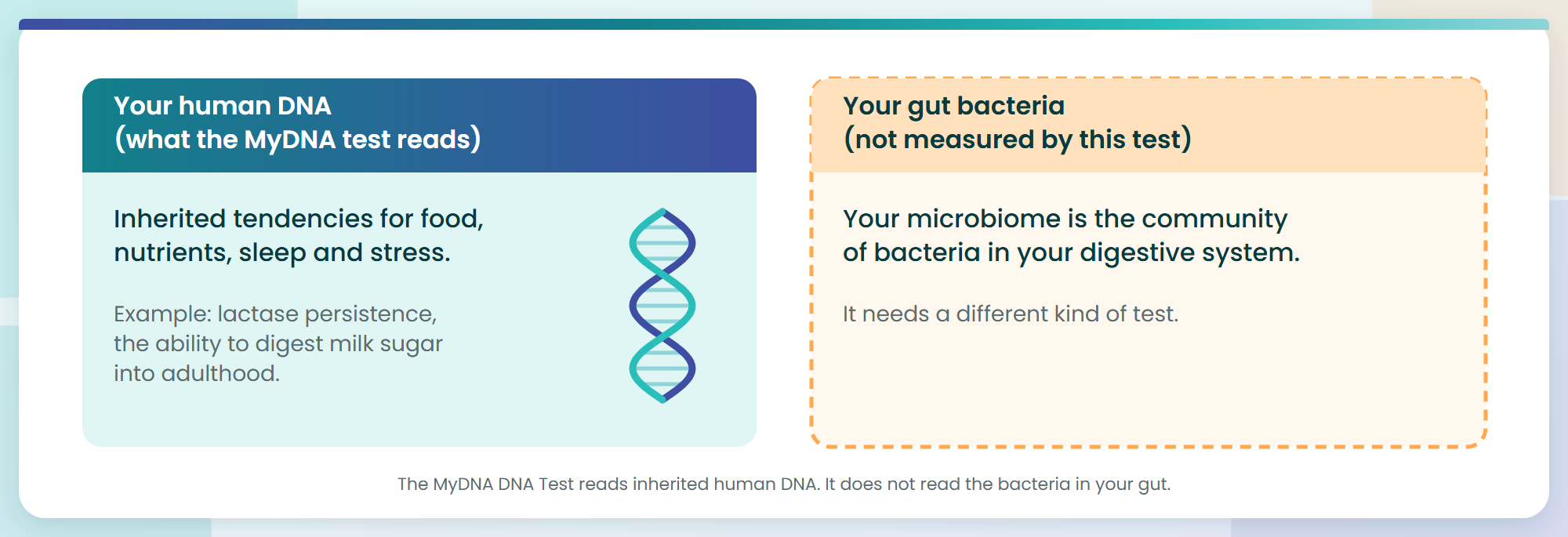
What your DNA does show is the inherited side of the conversation: how your own body is wired to handle food, nutrients, sleep and stress. Genes and gut interact in real ways. A well-known example is lactase persistence. Some people keep producing the enzyme that digests milk sugar into adulthood, and others do not, which affects how they respond to dairy.
Several areas of the MyDNA DNA Test connect to the gut-brain axis.
These show your genetic predisposition. They do not tell you whether you have a condition. Your consultant can talk you through what they mean for your plan. Symptoms that worry you are covered in the doctor section further down.
Tryptophan is the amino acid the brain uses to make serotonin, and B vitamins, folate and omega-3 fats play roles in how nerves and mood systems work. These reports show your genetic tendencies, and they do not show whether low mood or anxiety has a nutritional cause. They are not blood tests, so they point to where your consultant can help you focus your nutritional support, and where a blood test may be worth asking about.
Sleep and gut function influence each other. Knowing how you are wired for sleep helps you set up habits that suit you.
Stress is one of the main ways the brain talks to the gut. Your consultant can talk through what these tendencies mean for how you manage pressure.
Caffeine and alcohol affect both gut comfort and sleep. These reports show how your body tends to handle them, so your plan can fit you.
The reports also include mental health predispositions. These are sensitive, so your consultant goes through them with you in person, and you decide which ones you want to focus on.

A report on its own is a long document. A good plan is short and specific.
For everyday gut and well-being goals, start with your consultant. Some symptoms need a doctor first, because they can have causes that no diet or supplement addresses. If you are not sure which group you are in, see a doctor.
If you are ever thinking of harming yourself, call the Samaritans of Singapore 24-hour hotline on 1767, or 995 in an emergency.
If you are pregnant, have an existing condition, take prescribed medication or have a weakened immune system, speak to your doctor or pharmacist before starting any supplement, and let your consultant know.
Explore the MyDNA DNA Test, or talk to a consultant. Helix, our assistant, takes a few details first and then connects you with the team.